
There has neither been real data about the situation of people with intellectual disabilities and their families in the European Union nor in the whole Europe. Too much has been and still is based on assumptions that thanks to the ratification of the UNCRPD and thanks to national laws the rights of people with intellectual disabilities should be properly respected and protected.
However, the fact that member states ratify the UNCRPD and that the member states have national disability laws is not enough. Both the UNCRPD and national laws need to be applied in practice, into the everyday lives of each individual citizen with intellectual disabilities.
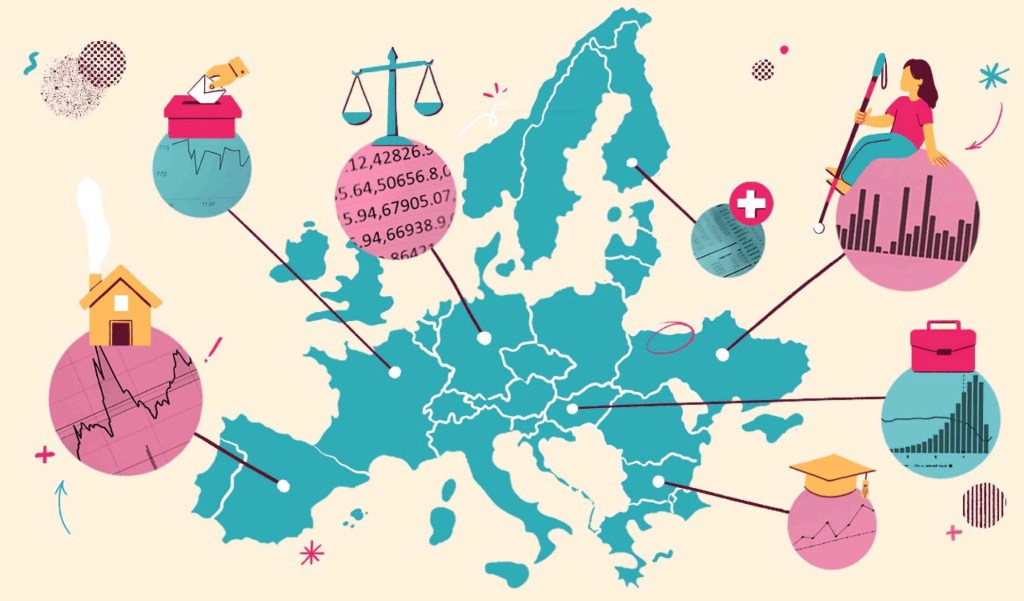
Inclusion Europe has taken a substantial step to cover a gap in information about the situation of people with intellectual disabilities and families. We have collected relevant and reliable data throughout Europe, provided by national organisations who know the situation best as they represent people with intellectual disabilities and families. From this data we compiled country-specific inclusion indicators. A simple tool which shows how inclusion has been brought into practice in 29 European countries.
Now we finally have data which everybody has been asking for and which has been completely missing until now. The indicators based on this data give country-specific information of where there is still work to be done, and where EU-resources must be directed to, to improve the situation. This is a good beginning, but the data collection needs to continue in a yearly basis to
- collect the same data also from rest of the European countries,
- show where Europe limits the rights of people with intellectual disabilities
- be able to follow the direction of the indicators and
- to give country-specific recommendations and resources for improvements.
Inclusion indicators give policy-makers valuable information of inclusion in Europe. The indicators contribute to implementation of the EU Disability Strategy. They help people with intellectual disabilities and their families to achieve full inclusion.
Inclusion Europe will continue to collect and evaluate this information, so that governments cannot hide away from their responsibilities in respecting rights and inclusion of people with intellectual disabilities.
At the same time, we expect and demand that governments and the EU collect and evaluate relevant, specific information themselves. It is their responsibility.
Inclusion of people with intellectual disabilities is a human right guaranteed by the UNCRPD. Inclusion means equality. Inclusion means belonging.
Here is the link to the first ever inclusion indicators which were launched in the EU Parliament in Brussels on November 29th 2023.

 JYRKI PINOMAA
Yksi kommentti